




Some decisions should never be left to chance (because you may not survive the outcome)
In Australia, the ability to make your own medical decisions is referred to as your 'decision-making capacity.' And when you have it, you probably don't think about it much. But when a person loses their decision making capacity (eg: due to a temporary illness, surgery, motor vehicle or workplace accident, or a more permanent cognitive decline), someone else needs to step in to make those medical decisions on a person's behalf.
The good news is you can appoint your own Person Responsible with legal authority to consent to (or even refuse) medical treatment on your behalf. But here is the problem; you need to have this legal document in place ahead of time, before you need it.
Read in this article
- Who is my default (government appointed) 'Person Responsible’?
- Why this is One Key Adult Decision Not to Leave to Chance?
- How to Clearly Nominate Your own 'Person Responsible'
- Why Legally Nominate Your Own 'Person Responsible'?
- Why bother making this decision now?
- Frequently Asked Questions: Medical Decision Makers & Guardianship
- Sources & Further Reading
Who is my default (government appointed) 'Person Responsible’?
For folks who have yet to make this key adult decision themselves, the government has already made this decision for you (and you might not like their choices).
The law has set up a default legal hierarchy that kicks in for you, if you haven't made this formal legal nomination yourself. And relying on the governments list of choices, can lead to unintended consequences; from significant distress for your loved ones who may not have the emotional ability or maturity, to make such decisions on your behalf through to relying upon an ex partner to make the best decision for you, during your vulnerable time.
There is a special legal order (hierarchy) that your Doctor must follow to get consent for medical treatment, if you are incapable of making medical decisions for yourself. In NSW the relevant Act is The Guardianship Act 1987 (NSW) and all other Australian states and territories have guardianship laws that are broadly similar.
Why this is One Key Adult Decision Not to Leave to Chance?
Imagine a scenario where you're unable to make medical decisions for yourself. Without a written directive, all medical professionals are legally required to follow a decision hierarchy about who can make medical decisions on your behalf - and it starts with your closest biological relatives.
While this might work for some, it's far from ideal for everyone.
- Elderly Family Members: Some people have family members who may now be frail aged, living with additional needs or whose decision making capacity's are very different to your own. Recognising that leaving your own medical decisions to these folks may create more distress and confusion, so nominating a long term Best Friend to have the legal authority to act on your behalf, makes good sence.
- Chosen Family Matters: For folks in the LGBTIQ+ community, their 'chosen family' are their strongest support network, often more so than biological (often estranged) relatives. Ensuring these trusted individuals of choice have the legal authority to act on your behalf, is crucial.
- Bridging Distances: If you're an expat living abroad, your immediate family might be thousands of miles away. Designating a local, trusted friend or relative ensures timely and informed decision-making.
- Navigating Complex Relationships: Sadly, not all family relationships are harmonious. If you're estranged from biological family or want to prevent an ex-partner (even a "psycho ex") from inadvertently gaining control over your medical choices by default, a formal nomination is essential.
How to Clearly Nominate Your own 'Person Responsible'
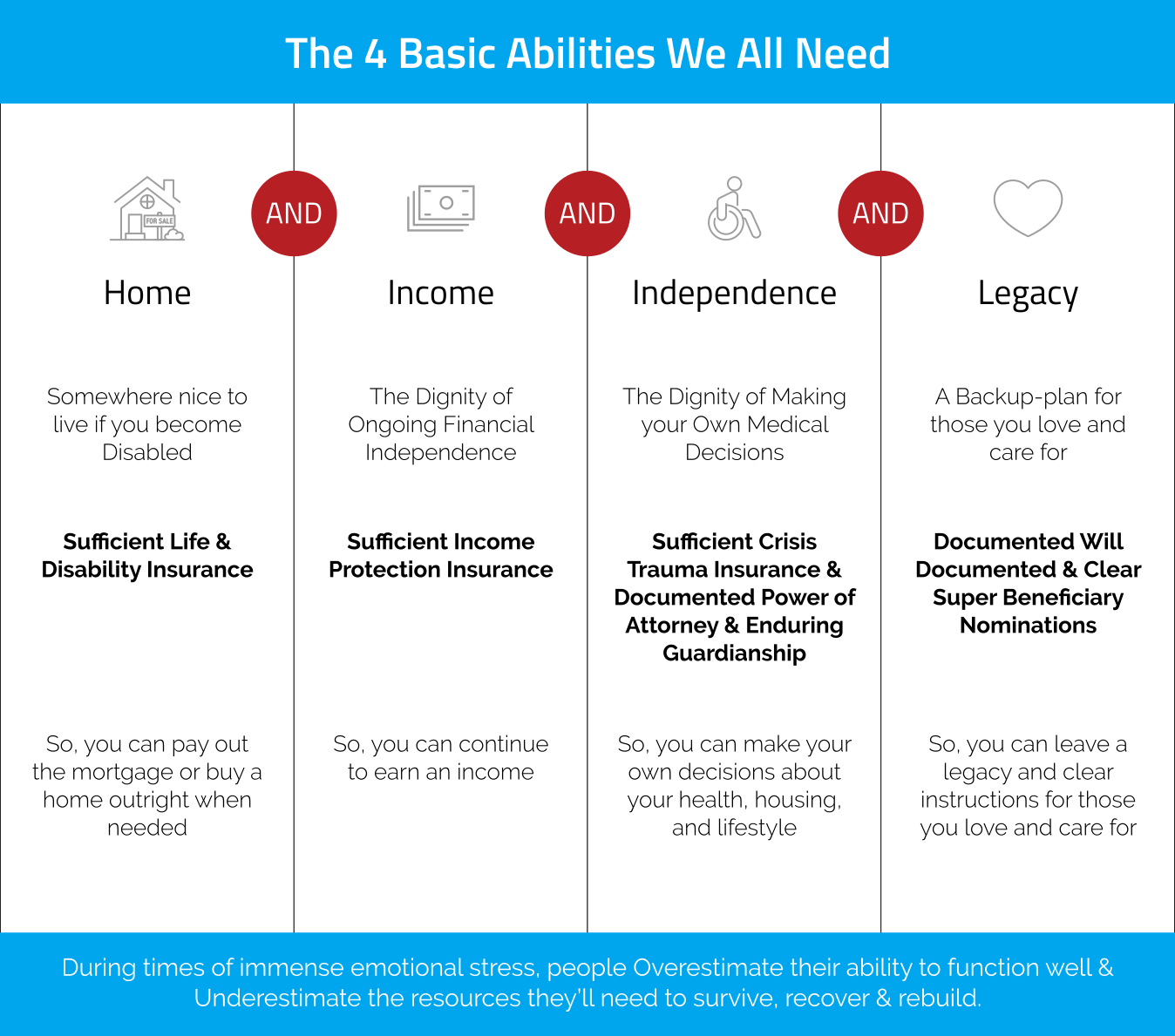
If you ever find yourself in a position where you need someone else to make important medical decisions on your behalf, the most effective way is to set up a legal document ahead of time called a Power of Enduring Guardianship. This important legally binding document allows you to nominate in writing who you want to be your Person Responsible for medical decisions.
Why Legally Nominate Your Own 'Person Responsible'?
- Informed consent: Medical and dental practitioners have a legal and professional responsibility to get consent to treatments before treating a patient.
- Respecting Your Wishes: By formally appointing someone in writing, you ensure your medical decisions align with your personal values, beliefs, and preferences, even if you can't communicate them. This includes critical choices about life-sustaining treatment, pain management or specific interventions you'd want or not want.
- Avoiding Uncertainty and Conflict in your Family & Extended Relationships: Without a formal legal nomination, if you lose mental capacity, healthcare professionals must follow a legal hierarchy (spouse, then children, etc.). This can cause confusion, delays, and painful disputes among family members. A formal documented appointment eliminates this ambiguity, designating a single, trusted individual to speak for you and protecting your loved ones from added burden during a crisis.
- Appointing the Right Person: The default legal hierarchy might not select the person you'd truly trust with such intimate decisions. You can choose someone who understands your values, remains calm under pressure, and can effectively advocate for your best interests, rather than someone higher on a default list.
Suddenly facing unexpected medical decisions is not something we plan for, but can plan to be ready for.
Why bother making this decision now?
A nominated Person Responsible is not necessarily the patients next of kin or carer. Hopefully you will never need to rely upon a Power of Enduring Guardianship document but if you do, you probably won't have enough time to get that arranged on the spot.
If you haven't yet nominated your Person Responsible, contact us for a confidential chat about your options.
Frequently Asked Questions: Medical Decision Makers & Guardianship
What exactly is a 'Person Responsible'?
A "Person Responsible" is the individual legally authorized to consent to or refuse medical treatment on your behalf if you lose your decision-making capacity. They aren't just a point of contact; they are your legal surrogate for healthcare choices. Without a formal appointment, the law decides who this person is, which may not align with your wishes.
Who does the government pick if I don't choose someone?
The law (such as the Guardianship Act 1987 in NSW) follows a rigid hierarchy: first a spouse or de-facto partner, then an unpaid carer, then a close friend or relative. If your family dynamic is complex or you are estranged from biological relatives, this default list can place your most intimate decisions in the hands of the wrong person.
How do I appoint my own chosen decision maker?
You do this through a legal document called a Power of Enduring Guardianship. This allows you to specifically name the person (or persons) you trust to make health and lifestyle decisions for you. It must be set up while you still have full mental capacity—it is a proactive "Plan B" that stays dormant until it is needed.
Why is it so critical to legally nominate someone myself?
Legal nomination provides clarity and protection. It ensures that the person advocating for you understands your values and can remain calm under pressure. It also eliminates "next-of-kin" ambiguity, which frequently causes painful disputes among family members during medical emergencies.
Is this particularly important for same-sex or de-facto partners?
Absolutely. For partners in unregistered relationships or those with "chosen families," the default legal hierarchy may prioritize biological relatives who are less familiar with your wishes. A formal appointment guarantees your partner or closest friend has the legal right to be in the room and make those critical calls.
Sources & Further Reading
- Guardianship Act 1987 (NSW) s 33A - The section of NSW law that legally defines the "Person Responsible" and the default hierarchy for medical and dental consent.
- NCAT Fact Sheet: Person Responsible - An official guide from the NSW Civil and Administrative Tribunal explaining the hierarchy in plain language.
- NSW Trustee and Guardian: Enduring Guardian - The primary NSW Government resource for information, forms, and services related to appointing an Enduring Guardian.
- Justice Connect: Enduring Guardianship in NSW - A clear, step-by-step guide on the purpose and process of appointing an Enduring Guardian.
Call us today on 1300 137 403 or email us here for a no-obligation private chat about your situation.
 Drew Browne is a specialty Financial Risk Advisor working with Small Business Owners & their Families, Dual Income Professional Couples, and diverse families. He's an award-winning writer, speaker, financial adviser and business strategy mentor. His business Sapience Financial Group is committed to using business solutions for good in the community. In 2015 he was certified as a B Corp., and in 2017 was recognised in the inaugural Australian National Businesses of Tomorrow Awards. Today he advises Small Business Owners and their families, on how to protect themselves, from their businesses. He writes for successful Small Business Owners and Industry publications. You can read his Modern Small Business Leadership Blog here. You can connect with him on LinkedIn. Any information provided is general advice only and we have not considered your personal circumstances. Before making any decision on the basis of this advice you should consider if the advice is appropriate for you based on your particular circumstance.


