
• Case ID: #12
  • Primary Personality Archetype: 🌱 The Steward (Rigidity Bias)
  • Systemic Risk: Intergenerational Stagnation (The Provider's Poison)
  • Financial Impact: Asset Squandering / $3M Opportunity Loss
  • Jurisdiction: Federal / National (General Estate Application)
  • Verification: Registry Archive / LGC Forensic Audit #12
Reading Time: 3 minutes

The Steward's Hoard: The Provider's Poison

'He thought he was building a legacy of comfort, but he was actually constructing a cage of dependency.'

Arthur was the ultimate 'Steward'. He had built a multi-million-dollar transport empire with one goal: ensuring his children would never have to work as hard as he did. He provided everything, the houses, the cars, and the monthly 'allowances', all paid for through a complex web of family trusts that he controlled with an iron fist. He called it 'The Hoard', a private treasury designed to shield his lineage from the harshness of the world.

The sting: By providing the fruit without ever showing them how to plant the tree, he had 'poisoned' their initiative. When Arthur passed away, his children were middle-aged adults with no professional skills and a profound sense of entitlement. Without his authority to manage the cash flow, they began treating the trust capital as a bottomless ATM. Within four years, the three-million-dollar liquid reserve was gone, spent on depreciating luxuries and failed ventures they did not understand.

The 'Steward' had provided the means for their life, but in doing so, he had ensured they lacked the meaning to sustain it.

  • Clinical Mystery: Why did 'Total Security' construct a $3M cage of dependency for his children?
  • The Human Intent: To provide total financial security as a substitute for professional development or personal struggle.
  • The Diagnosis: The Provider's Poison. A failure of the Steward Archetype where the 'Provider' instinct suppresses the 'Mentorship' instinct.

Case File: Forensic Analysis

🔬 REGISTRY FILE: CLINICAL PATHOLOGY

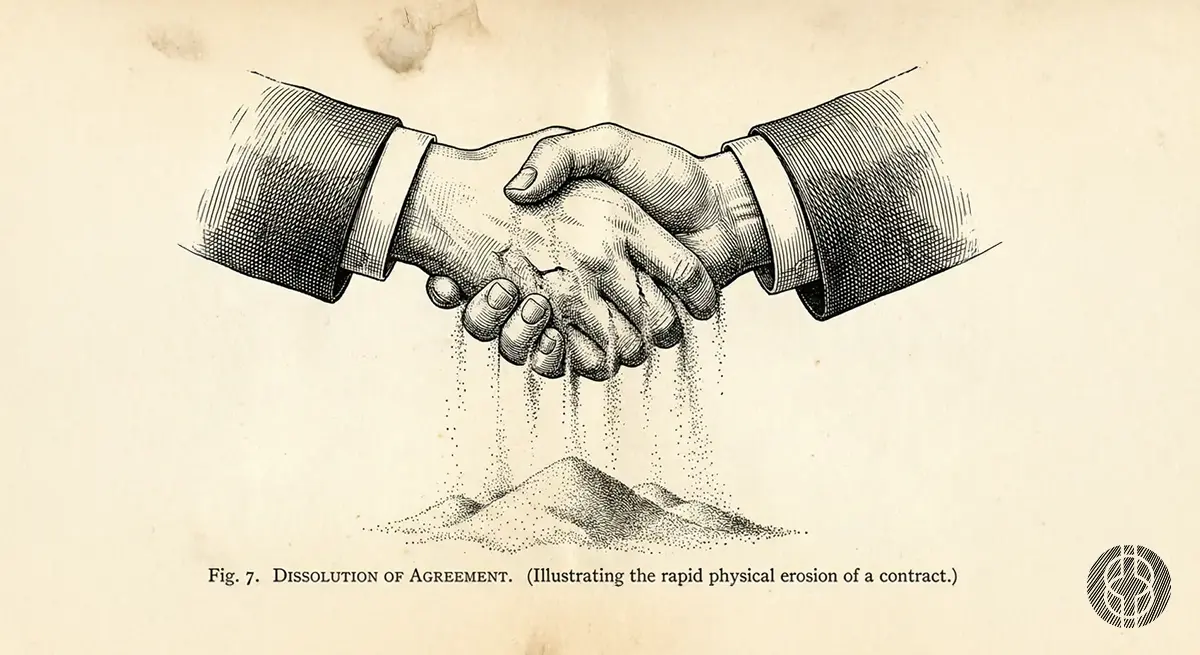
The Artifact: The Unfunded Buy-Sell Agreement

The Intent: To establish a legal exit strategy without the perceived 'waste' of capital on insurance premiums or cash reserves

The Reality: 'The Liquidity Trap', where a legal obligation to buy out a partner exists but the cash to execute the transaction is missing

Pathology: This is a failure of the Peacemaker Archetype where the brain's 'Optimism Bias' assumes the business will always have enough credit or cash flow to handle a buyout: the individual focuses on the 'Legal Form' while ignoring the 'Financial Fuel' required to make that form functional during a crisis

The Legal Reality:  Under Australian Law, a Buy-Sell Agreement is a binding contract: if a trigger event occurs, the surviving partner is legally obligated to buy the shares, and a failure to do so can lead to a breach of contract lawsuit from the outgoing partner's estate, often resulting in the forced liquidation of the company

🟢 ARCHITECTURAL PROTOCOL: SYSTEMIC FIX

The Antidote: The Funded Exit Protocol: move from 'Unfunded Liability' to 'Guaranteed Liquidity' by matching every Buy-Sell Agreement with a specific insurance policy or a legally quarantined sinking fund

The Result: You transition from 'Contractual Vulnerability' to 'Guaranteed Liquidity': you ensure your business exit is a clean transition instead of a financial collapse

The Sobering Script: 'I read about 'The Unfunded Buy-Sell'. Two partners had a great agreement, but when one got hurt, the other had to borrow $2.5M to buy him out and the debt destroyed the company. I do not want our 'exit plan' to be the reason we go broke. Let's look at the 'Manual' and make sure our agreement is fully funded so the cash is there the second we need it'


Sorry, this website uses features that your browser doesn’t support. Upgrade to a newer version of Firefox, Chrome, Safari, or Edge and you’ll be all set.