


• Case ID: #00
  • Systemic Risk: Introspection Gap (The Mirror Trap)
  • Financial Impact: Total Estate Preservation (Potential)
  • Jurisdiction: Universal / Behavioral (The Psychology of Wealth)
  • Verification: Legacy Guard Core Protocol / Registry Introduction #00
Reading Time: 3 minutes

Case #00: The Mirror (How to Read the Shadow Registry)

'Before you study the failures of others, you must first recognise the face in the glass, for your greatest strength is often the very shovel that digs the hole.'

Welcome to the Shadow Registry. This is not a library of stories, but a diagnostic landscape. To navigate these fifty files effectively, you must understand that the law does not care about your intentions, your history, or your character. It only cares about the paper trail you leave or the registries you ignore.

  • Every individual documented in these files was a success in their own right, yet they all fell victim to a 'Shadow Risk' they couldn't see, because it was hidden behind their own leadership style.
  • As you move through this volume, you will see four distinct icons appearing. These are the LGC Primary Archetypes.

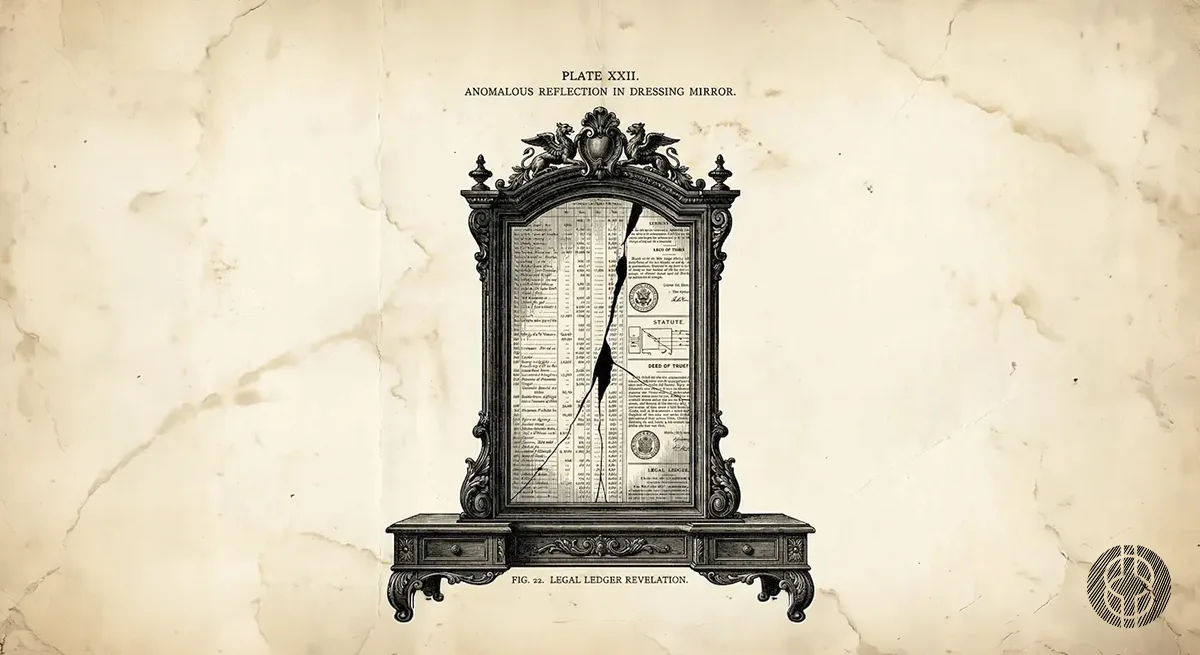
Registry Introduction: The Mirror of Risk

If you identify with the precision of the Architect, the reliability of the Steward, the diplomacy of the Peacemaker, or the selfless care of the Caretaker, you will find your specific vulnerabilities mapped out in the pages that follow.

Use this 'Mirror' to audit your own structures before the 'Shadow' reality becomes your legal reality.

  • 🏛️ The Architect (Inflexibility Bias): Designs intricate systems and robust plans but neglects component maintenance or execution during a crisis. Risk: Structural Obsolescence
  • 🌱 The Steward (Rigidity Bias): Relies on old world foundations and physical possession instead of modern registry reality. Risk: Registry Disconnect
  • 🕊️ The Peacemaker (Neglect Bias): Avoids uncomfortable governance conversations to preserve harmony, creating hard legal stalemates. Risk: Structural Friction
  • ❤️‍🩹 The Caretaker (Self-Sacrifice Bias): Prioritises emotional family fixes and immediate needs over 'cold' statutory formalities. Risk: Formal Invalidity

Beyond the tragedy lies the autopsy. For every file in the Shadow Registry, we distill the Clinical Mystery, the Human Intent, and the final structural Diagnosis.

  • Clinical Mystery: Why do highly intelligent individuals repeatedly fall into the same "legal traps" that have claimed thousands before them?
  • The Human Intent: To navigate complex life and business transitions using "Common Sense" and "Intuition," assuming the law follows the same logic as human relationships.
  • The Diagnosis: The 0.08s Neural Glitch. The human brain processes emotion and "intent" in the Amygdala faster than the Prefrontal Cortex can process "structure." This create a "Ghost Window" where we make life-altering legal decisions based on how we feel rather than how the law is written. The Registry is the mirror that reveals this blind spot.

Case File: Forensic Analysis

🔬 REGISTRY FILE: CLINICAL PATHOLOGY

The Artifact: The Silent Trust

The Intent: To avoid beneficiary entitlement and maintain absolute discretion by keeping the existence of the trust a secret from the heirs

The Reality: The Information Void', where the failure to notify beneficiaries of their income entitlements leads to the total loss of all structural tax benefits

Pathology: This is a failure of the Steward Archetype where the brain's 'Privacy Centre' creates a strategic blind spot: the individual assumes that silence is the best way to prevent entitlement, failing to realise that a trust is a legal relationship that requires informed parties to be valid in the eyes of the law

The Legal Reality:  Under Australian Taxation Law, a trustee must have a 'present entitlement' created for a beneficiary: if a trust has been operating in secrecy and the ATO determines the beneficiaries were never made aware of the income, the distributions can be declared void and taxed at the highest marginal rate in the hands of the trustee

🟢 ARCHITECTURAL PROTOCOL: SYSTEMIC FIX

The Antidote: The Beneficiary Engagement Protocol: move from 'Strategic Secrecy' to 'Legal Transparency' by providing beneficiaries with a formal 'Notice of Entitlement' and ensuring they acknowledge the distribution in writing

The Result: You transition from 'Hidden Liability' to 'Validated Governance': you ensure your trust is a legally recognised vehicle instead of a private secret that can be dismantled by the authorities

The Sobering Script: 'I read about 'The Silent Trust'. A man kept his family trust a secret for twenty years to avoid his kids getting 'lazy', but when the tax office found out the kids didn't know they were receiving income, they hit him with a $180,000 bill. I want our trust to actually work for us. Let's look at the 'Manual' and make sure we are following the rules by keeping everyone in the loop properly so the tax office doesn't take our legacy'


Sorry, this website uses features that your browser doesn’t support. Upgrade to a newer version of Firefox, Chrome, Safari, or Edge and you’ll be all set.

{ "@context": "https://schema.org", "@graph": [ { "@type": "Article", "mainEntityOfPage": { "@type": "WebPage", "@id": "https://sapience.com.au/resources/penny-dreadful-case-files/case-file-00-the-mirror-how-to-read-the-registry" }, "headline": "Case File #00: The Mirror | How to Read the Registry", "description": "An introductory guide to the Shadow Registry, deconstructing the 0.42-second neural glitch and the biological blind spots that lead to legal tragedy.", "image": "https://sapience.com.au/images/shadow-registry-the-mirror.jpg", "author": { "@type": "Organization", "name": "Sapience Financial", "url": "https://sapience.com.au" }, "publisher": { "@type": "Organization", "name": "Sapience Financial", "logo": { "@type": "ImageObject", "url": "https://sapience.com.au/logo.png" } }, "articleBody": "The Mirror is the diagnostic lens of the Shadow Registry. It allows individuals to see past their own 'Social Brain' and recognize the structural failures that occur in the tenth of a second where life-changing decisions are made." }, { "@type": "FAQPage", "mainEntity": [ { "@type": "Question", "name": "What is the Shadow Registry?", "acceptedAnswer": { "@type": "Answer", "text": "The Shadow Registry is a clinical archive of real-world Australian legal tragedies. It is designed to expose the hidden gap between human intent and statutory reality, allowing individuals to architect a more secure legacy." } }, { "@type": "Question", "name": "What is the 0.42-second glitch?", "acceptedAnswer": { "@type": "Answer", "text": "The 0.42-second glitch is the neural window where the brain's emotional and social circuitry overrides its logical risk-assessment. This is the moment where most estate and business succession failures are born." } }, { "@type": "Question", "name": "How should I read the Penny Dreadful Case Files?", "acceptedAnswer": { "@type": "Answer", "text": "Each case file consists of two parts: the Penny Dreadful narrative (the human tragedy) and the Forensic Friday autopsy (the technical deconstruction). Read the story to understand the scent of the risk, and the autopsy to implement the structural cure." } } ] } ] }